
PLYMOUTH RESIDENTIAL ROOF REPLACEMENT
Protecht Exteriors
Where Technology and Construction meet
Residential Roof Replacement in Plymouth, Michigan
Expert Full Roof Replacement — City of Plymouth Permit Pulled · Owens Corning Systems · Craftsman Bungalow & Colonial Specialists
Plymouth is one of the most architecturally diverse communities in our service territory — a city of under two square miles surrounded by Plymouth Township, with a housing stock that spans nearly a century of construction from pre-war Craftsman bungalows and American Foursquares in the Old Village corridor to 1950s and 1960s ranches along Sheldon and Haggerty roads to substantial 1980s and 1990s colonials in Newburgh Estates, Heritage, Ridgewood, and the subdivisions that spread across the broader Plymouth Township footprint. Each era brings its own roofing lifecycle, its own set of likely deficiencies, and its own complexity profile. The City of Plymouth's active historic character, strong Realtor community, and thorough buyer inspection standards mean that roofing work here carries real weight at the point of resale — and shortcuts are noticed. Protecht Exteriors serves all of Plymouth, pulls City of Plymouth permits on every job within city limits, and understands what the full range of Plymouth's housing stock actually requires during a replacement.
What to Expect: Roof Replacement in Plymouth, MI
15 Steps — From Free Inspection to Final Walkthrough · Pre-War Bungalows to Large Colonials — We Know the Difference
Free Inspection + Written Assessment
A certified inspector walks the full roof system and attic, documenting all findings with photos. On Plymouth's older homes, the attic inspection is especially critical — board sheathing condition, ventilation adequacy, and multi-layer situations are all discovered here, not from the street. On newer colonials, the inspection covers all dormers, wall junctions, and valleys. The home's age and style determine the depth of the inspection.
Precise Measurement + Detailed Estimate
Plymouth's diverse housing stock cannot be accurately priced without precise measurement — a Craftsman bungalow with a steep 9/12 pitch has more actual roof surface than its modest footprint suggests, and a large Heritage colonial has flashing scope that doesn't show up in satellite square footage. The written estimate itemizes materials, labor, required code upgrades, and disposal with every line item disclosed before you commit.
City of Plymouth / Plymouth Township Permit Pull
We pull the appropriate permit for your property's jurisdiction — City of Plymouth for homes within city limits, Plymouth Township for homes outside. No work begins until the permit is posted. In Plymouth's active real estate market, a permit-skipping contractor creates a disclosure complication that surfaces at exactly the wrong moment. We never skip this step.
Material Delivery & Property Protection
Materials staged carefully at your property. Plymouth's older neighborhoods have mature landscaping, narrow driveways, and established tree canopy that we work around deliberately. Tarps deployed across all ground cover before tear-off begins. On Plymouth's tighter city lots, debris management setup is more detailed than on large suburban lots — we plan for the property we're on.
Full Tear-Off
All existing material removed to the decking. On Plymouth's pre-war bungalows and mid-century ranches where multi-layer situations are common, full tear-off is typically required — and provides the opportunity to properly assess the sheathing underneath. We do not re-roof over an existing layer that puts the home at or over the two-layer limit. Always disclosed upfront.
Decking Inspection — Critical on Plymouth's Older Homes
Board sheathing on Plymouth's pre-war bungalows and older ranches is assessed board by board. Deterioration at eaves from historic ice dam backup, at ridgelines from inadequate ventilation, and at any prior leak locations is documented with photos. All deteriorated sections replaced before the new system goes down. On a home with 80-year-old board sheathing, this step is not perfunctory — it determines the structural substrate everything else sits on.
Ice & Water Shield Installation
Self-sealing membrane at all eaves, valleys, and penetrations per IRC R905.2.7. On Plymouth's steep-pitch bungalows where ice dam formation is most severe, we extend eave membrane coverage further up the slope than the code minimum — the physics of ice dam water backup on a steep pitch demands it. Valley membrane coverage is thorough on all Plymouth homes regardless of age.
Synthetic Underlayment
Owens Corning Deck Defense or equivalent over the field decking. On Plymouth's older homes where installation may require extra time due to pitch or complexity, quality underlayment provides weather protection for the underlying structure during the installation window. Tear resistance and water shedding performance matter more on steep pitches where foot traffic is more concentrated.
Drip Edge Installation
Metal drip edge at eaves and rakes per IRC R905.2.8. On Plymouth's mature-neighborhood homes with established tree canopy and significant organic debris loads in the gutters, drip edge is the first line of defense against fascia rot. On steep-pitch bungalows with narrow rakes, drip edge installation requires care around the trim profiles that define these homes' architectural character.
Starter Strip Installation
Owens Corning Starter Strip Plus at eaves and rakes — factory adhesive seal on the first shingle course. On Plymouth's west-facing slopes where storm wind arrives with open fetch from the I-275 corridor, proper starter strip adhesion at the eave is the difference between a roof that holds in a 70 mph gust and one that loses a course. Not cut-down field shingles — proper starter strip every time.
Shingle Installation
Installed per manufacturer nailing pattern — proper SureNail zone nailing on Duration products. On Plymouth's steep-pitch bungalows, maintaining consistent exposure and straight coursing on a 9/12 or steeper pitch requires crew experience. On the multi-plane colonials of Plymouth's newer subdivisions, alignment across valley intersections and dormer faces requires the same discipline. We don't rush layout to make an aggressive schedule.
Ridge Cap + Hip Cap Installation
Owens Corning hip and ridge cap installed over the completed field. On Plymouth's colonials with multiple hip runs from garage wings and dormer transitions, cap work is substantial. On steep-pitch bungalows with prominent visible ridgelines, the cap installation is a finish detail that reads from the street and reflects the quality of the overall job. Properly cut and set, not rushed.
Flashing — All Step Flashing Replaced
All step flashing at every dormer and garage wall junction replaced. Valley metal to manufacturer spec at every intersection. Counter-flashing at chimneys replaced where compromised — and Plymouth's older homes have more chimneys per capita than most of our service territory. Pipe boots get new EPDM or TPO collars. On Plymouth's pre-war bungalows with multiple penetrations and complex fascia profiles, flashing is the most detail-intensive part of the job.
Magnetic Nail Sweep + Full Property Cleanup
Driveway, yard, and all adjacent areas swept with magnetic rollers. All debris removed before we leave. On Plymouth's city lots where neighboring properties are close and sidewalk traffic is active, cleanup is thorough and same-day. On Plymouth's older homes where narrow side yards and mature landscaping create tight access, we work carefully around plantings and hardscape that can't easily be replaced.
Final Inspection + Warranty Registration
We walk the completed roof with you, document all flashing points and upgrades with photos, and register your Owens Corning warranty same day as completion. In Plymouth's active real estate market — where buyer inspectors are thorough and roof documentation matters at disclosure — that photo record and warranty registration is part of the value you're protecting with a proper replacement.
Owens Corning Roofing Systems for Plymouth Homes
Matched to Your Home's Era, Pitch, and Neighborhood Character
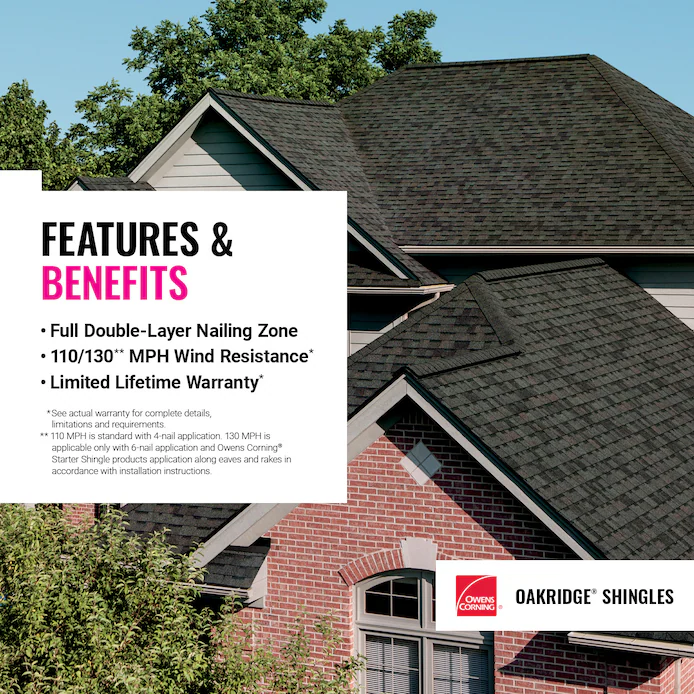
Oakridge
Oakridge delivers genuine architectural shingle performance at a price point that makes sense for Plymouth's mid-century ranches and more modest homes — the straightforward 1950s–1970s ranches and splits that make up a significant portion of Plymouth Township's housing. HighDefinition color blends complement the traditional palette of Plymouth's established neighborhoods, and the limited lifetime warranty provides the documentation Plymouth's real estate market values at resale. For Plymouth's smaller and simpler homes, Oakridge is the honest answer — not an upcharge for complexity that isn't there.
Duration Series
Duration is the right answer for the majority of Plymouth's replacement conversations — particularly the 1980s and 1990s colonials in Newburgh Estates, Heritage, Ridgewood, and equivalent Plymouth Township subdivisions. SureNail Technology delivers genuine 130 mph wind resistance on homes where west-facing slopes face open storm approach along the I-275 corridor. The 50-year limited warranty and full Owens Corning system coverage it unlocks when paired with matching underlayment and ventilation provide the warranty documentation that Plymouth's buyers and inspectors look for. For Plymouth's mid-to-upper range homes, Duration matches the home's quality level with a product that justifies its cost over the long term.
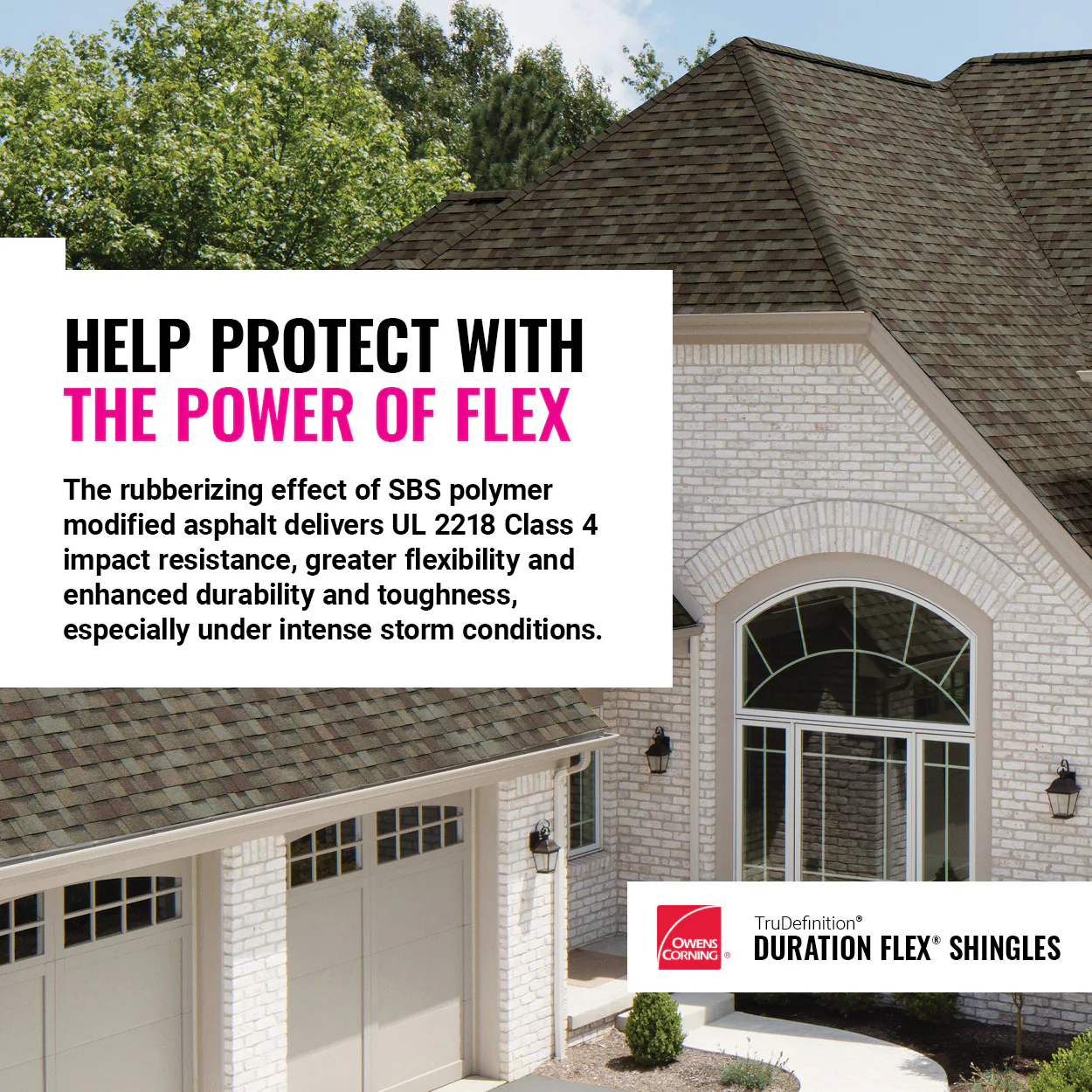
Duration FLEX
Duration FLEX uses a rubberized asphalt sealant strip designed to stay flexible across Michigan's full temperature range — critical on Plymouth's steep-pitch pre-war bungalows where cold-weather tab adhesion is tested every January. The steep-pitch bungalows in Plymouth's Old Village area that face north or have shaded valley sections are exactly the application where FLEX's cold-weather flexibility provides meaningful protection beyond standard Duration. Same SureNail spec and warranty framework, with the rubber-modified sealant that actually adheres when the temperature drops to single digits and refreezes before tabs can bond conventionally.
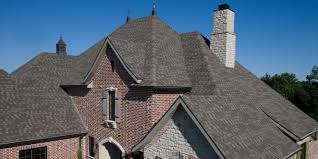
Berkshire
Berkshire's layered shadow lines and deep dimensional character make it the right choice for Plymouth's higher-end homes — the larger Heritage Hills colonials, Ridgewood estates, and Plymouth Township properties where the home's value and the neighborhood's character justify a premium finish. In Plymouth's active real estate market, the visual difference between Berkshire and a standard architectural shingle is visible from the street and noticed by buyers and appraisers. On Plymouth's Craftsman bungalows where the roofline is a prominent architectural feature, Berkshire's slate-profile shadow depth can actually complement the home's historic character in a way that a flat architectural shingle doesn't. Worth the conversation on any Plymouth home where visual quality matters at resale.
Roof Replacement Cost & Timeline in Plymouth, MI
Plymouth's replacement cost range is wider than almost any other community we serve — because the homes themselves span almost a century of construction and a wide range of size and complexity. A 1,000 square foot Craftsman bungalow in the Old Village with a steep 9/12 pitch and original board sheathing is a very different job than a 3,600 square foot colonial in Ridgewood with four dormers and a three-car garage wing. Both are Plymouth replacements. Both get the same level of inspection depth and installation quality. The price reflects the actual scope — not a flat-rate formula applied regardless of what's on the roof.
The cost drivers unique to Plymouth's older housing stock are the ones that get missed when a contractor estimates without inspecting: board sheathing replacement, multi-layer tear-off on pre-war homes, ventilation system conversion from gable-only to ridge-and-soffit, and the additional labor that steep pitches add to every phase of the install. These are real costs, and they should be disclosed in writing before work starts — not discovered partway through a job that was bid based on a satellite image and a square footage estimate.
For Plymouth's newer colonials in Newburgh Estates, Heritage, and Ridgewood, the cost drivers are more conventional — size, complexity, and the era-specific code upgrades that were skipped when these homes were built. Ice shield at valleys and eaves, drip edge on the rakes, step flashing replacement at dormers and garage walls — these are the items that differentiate a complete replacement from a shingle-only re-cover.
Plymouth replacements typically range from $8,500 for a smaller mid-century ranch to $24,000 or more for a large, complex colonial or a steep-pitch bungalow with significant sheathing and ventilation scope. Storm damage claim approvals typically leave you responsible for your deductible only. The only real number is the one from a free written estimate after precise measurement and physical inspection.
Plymouth Replacement Timeline
Serving All of Plymouth — City and Township
Protecht Exteriors serves all of Plymouth — city and township — every neighborhood from Old Village's pre-war bungalows to the newest colonial subdivisions along Haggerty Road. Our Flat Rock office is approximately 35–40 minutes southeast via I-75 north and I-275 north to Ann Arbor Road.
Plymouth is part of our broader Southeast and Metro Detroit Michigan service footprint. We pull City of Plymouth permits for homes within city limits and Plymouth Township permits for homes outside. We also serve adjacent communities including Canton, Northville, Livonia, and Wayne for homeowners in the broader western Wayne County area.
Request Your Free Replacement Estimate in Plymouth
Whether your home is a pre-war Craftsman bungalow in the Old Village, a 1960s ranch on Sheldon, or a 1990s colonial in Newburgh Estates or Heritage, the right starting point is a free inspection with precise measurement. We'll give you a written estimate with everything disclosed — size, pitch, sheathing condition, required code upgrades, and shingle options — before you make any commitment.
Here's what happens after you submit:
- We contact you within 1 business day to schedule your inspection
- A certified Protecht inspector visits your Plymouth property
- You receive precise measurement, detailed written findings, and photo documentation
- Attic inspection included — sheathing and ventilation assessed on all Plymouth homes
- Insurance guidance provided if storm damage is identified
What Southeast Michigan Homeowners Say
Real reviews from homeowners across Metro Detroit and Wayne County.
Plymouth, MI Roof Replacement FAQs
How much does roof replacement cost in Plymouth, MI?
Typically $8,500 to $24,000 or more, depending heavily on size and era. Plymouth's housing spans from small 1920s Craftsman bungalows to large 1990s colonials — the cost range reflects that diversity. Pitch, sheathing condition, ventilation scope, and required code upgrades all factor in. The only accurate number comes from a free written estimate after physical inspection and precise measurement.
Do Plymouth's historic bungalows need special roofing consideration?
Yes, in several ways. Steep pitches (8/12–10/12), original board sheathing, gable-vent-only ventilation, and multi-layer situations are all common on pre-war Plymouth bungalows. These are manageable complexities for an experienced crew — but they need to be inspected and priced correctly before the job starts. A contractor who estimates a 1925 Plymouth bungalow without an attic inspection is guessing, and the surprises show up on your bill mid-job.
Who issues permits for Plymouth roof replacements?
The City of Plymouth building department issues permits for homes within city limits. Plymouth Township has a separate permit process for homes outside. Protecht Exteriors handles the correct permit pull for your property's jurisdiction on every job. We identify which authority applies during the estimate process — you don't have to figure that out yourself.
My Plymouth home was built in the 1960s — what will need to be upgraded?
Almost certainly ice and water shield (absent on all pre-1990s Plymouth homes), drip edge (commonly omitted on 1960s construction), and ventilation assessment at minimum. On a 1960s ranch, the box vents are almost certainly undersized, may be blocked by blown-in insulation added later, and may not meet current code. Decking condition is also a real consideration on a 60-year-old home. We assess all of it during inspection and disclose findings upfront before you commit.
Storm damaged my Plymouth home — does insurance cover replacement?
Possibly, and on a Plymouth home where values are significant, the claim is worth pursuing. We inspect, document with photos, and coordinate directly with your adjuster through the full process. Michigan's filing window is two years from the storm date. Don't assume the roof is fine because you haven't seen an interior leak yet — granule loss and sealant failure from wind or hail damage can take 12–18 months to become a visible interior problem while the damage accumulates underneath.
Ready to Replace Your Plymouth Roof the Right Way?
Pre-war bungalows to large colonials — Plymouth's housing diversity demands full-spectrum roofing experience. City of Plymouth and Plymouth Township permits pulled on every job. Precise inspection before every estimate. Owens Corning certified. No surprises mid-job. Your Plymouth home is worth protecting correctly.

Where Technology and Construction meet
Quick Links
Home
Services